How to play poker: basic Texas Hold’em rules
How to play poker in a Texas Hold’em hand
To understand how to play poker, start with the sequence of a hand: players receive two hole cards, take part in betting rounds, follow the revealing of the community cards and, when necessary, compare their best five-card hands at showdown. A player can win with the strongest five-card hand at showdown or by being the only player left after all opponents fold. [2]
In Texas Hold’em, the button and blinds set the starting positions, and the hand can pass through four betting rounds: pre-flop, flop, turn and river. [2][3]
When the hand continues to showdown, the sequence can be read as follows:
- The button marks a reference position at the table.
- Two players post the mandatory blinds.
- Each participant receives two hole cards.
- The table reveals community cards in stages.
- Players may continue betting or fold, depending on the action in the round.
- If at least two players remain after the final betting round, they compare their hands at showdown to determine the result. [1][2]
The Texas Hold’em sequence: blinds, cards and betting rounds
Button, small blind and big blind
The button marks the dealer position. At tables with three or more players, the player immediately to its left posts the small blind and the next player posts the big blind. These forced bets start the hand; the button moves one seat clockwise after each hand. [1][2][3]
Pre-flop: the two hole cards
After the blinds are posted, each player receives two private hole cards. At a table of three or more, the first player to act before the flop sits immediately to the left of the big blind. [1][2]
On a turn, fold gives up the hand, call matches an existing bet, and raise increases it when raising is allowed. Check passes the action without adding chips. Before the flop, only the big blind may check if no one has raised; a player facing an unmatched bet cannot check. [2][3]
Flop: three community cards
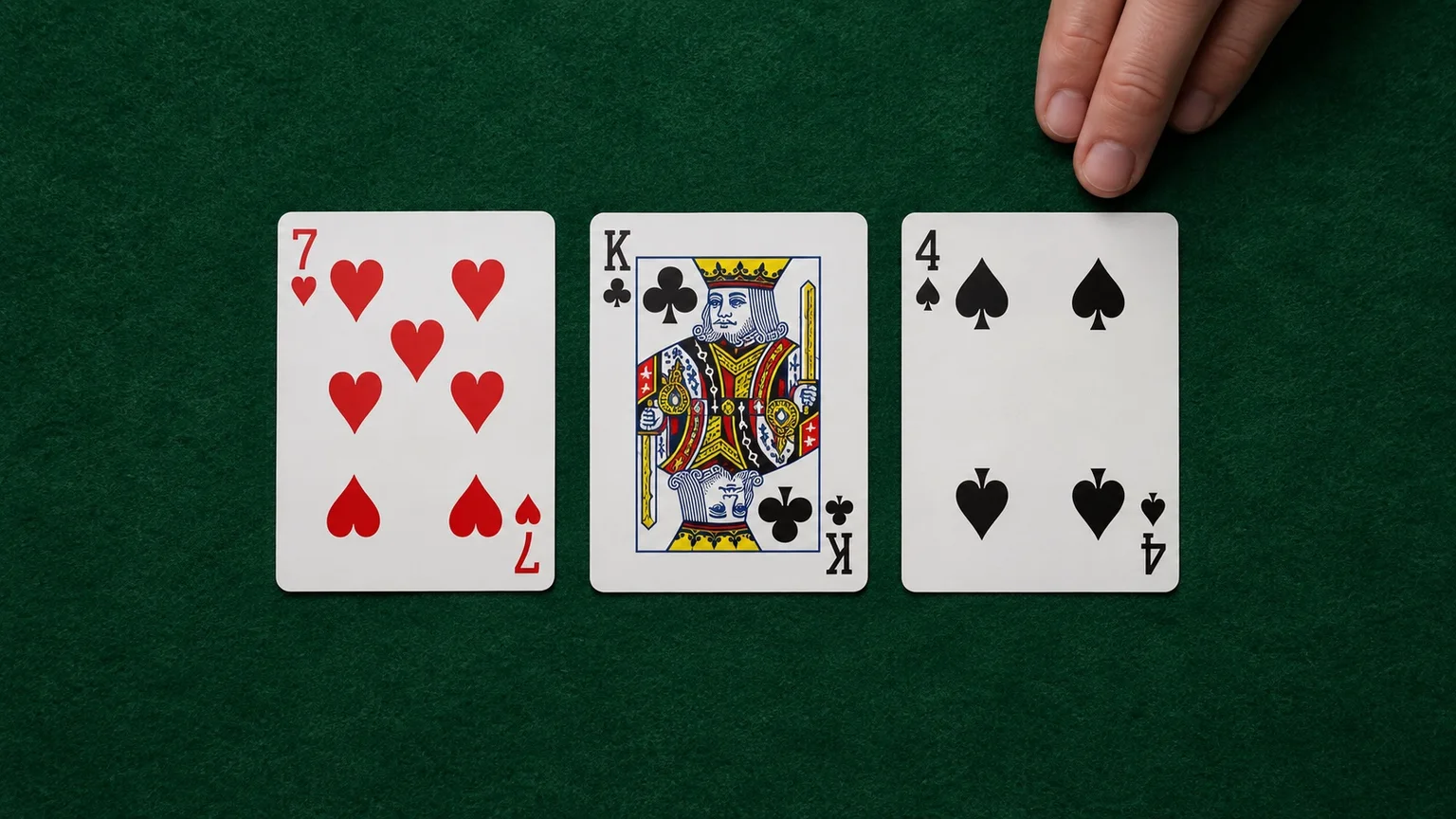
After the pre-flop betting round, three shared community cards are revealed: the flop. Players still in the hand use these cards together with their private cards to evaluate their possible five-card hands. A new betting round follows. [1][2]
From the flop onward, the first active player to the left of the button acts first in each betting round. When no bet is pending, a player may check or bet; when facing a bet, the available choices include calling, raising where allowed, or folding. [3]
Turn and river: the next community cards
If the betting round is completed and at least two players remain, a fourth community card is revealed. This card is the turn, and it is followed by another betting round. [1][2]
Then, the river is the fifth and final community card, followed by the final betting round. The hand can end before all five community cards appear if every opponent folds, leaving one player to win the pot. [1][2]
When at least two players remain after the final round, the hand proceeds to showdown and the cards are compared. [2]
Showdown: the final comparison
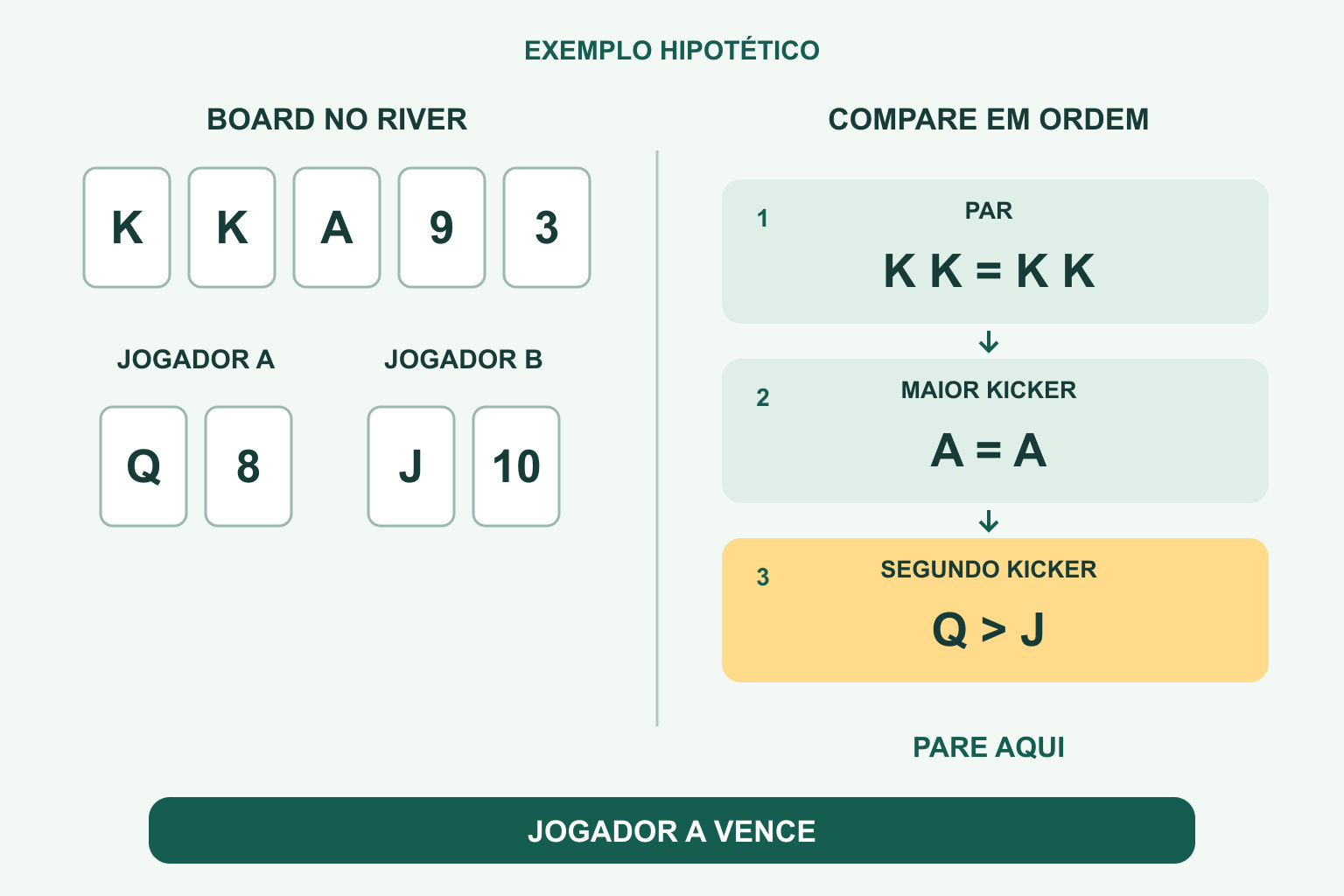
If at least two players remain after the last betting round, they compare their best five-card hands at showdown. In Texas Hold’em, a player may use both, one, or none of the two hole cards: the best five can also be the five community cards alone. Equal best five-card hands split the pot. [2][3]
An example of forming a hand
For example, if the five community cards are A-7-2-Q-7 and a player holds J-7, the 7 in hand joins the two 7s on the board to form three of a kind, sevens. [1]
Texas Hold’em hand rankings
The table below presents the order of the hands, from strongest to weakest. [3]
| Order | Hand | Basic formation |
|---|---|---|
| 1 | Royal flush | A sequence from 10 through ace, with all cards of the same suit |
| 2 | Straight flush | Five cards in sequence and of the same suit |
| 3 | Four of a kind | Four cards of the same rank |
| 4 | Full house | Three of a kind and a pair |
| 5 | Flush | Five cards of the same suit |
| 6 | Straight | Five cards in sequence |
| 7 | Three of a kind | Three cards of the same rank |
| 8 | Two pair | Two pairs and an additional card |
| 9 | One pair | Two cards of the same rank and three additional cards |
| 10 | High card | The highest-value card when no higher combination is formed |
At showdown, the higher category wins. When players have the same category, compare their best five-card hands; identical best hands split the pot. [1][3]
Next: follow one complete hand
In your next hand, identify the button and blinds, notice who acts first before the flop, then follow the flop, turn and river as the community cards appear. On each betting round, distinguish checking from calling a bet. At showdown, compare each player's best five cards—even if some use fewer than two hole cards. [2][3]

 3 days ago